Most property disputes in Mumbai do not start with a bad location or a bad price. They start with a document nobody asked to see before the booking amount was paid. By the time the problem surfaces, often years later, the buyer has already registered the flat, taken a loan against it and moved in. Fixing it at that stage is far harder than checking it upfront.
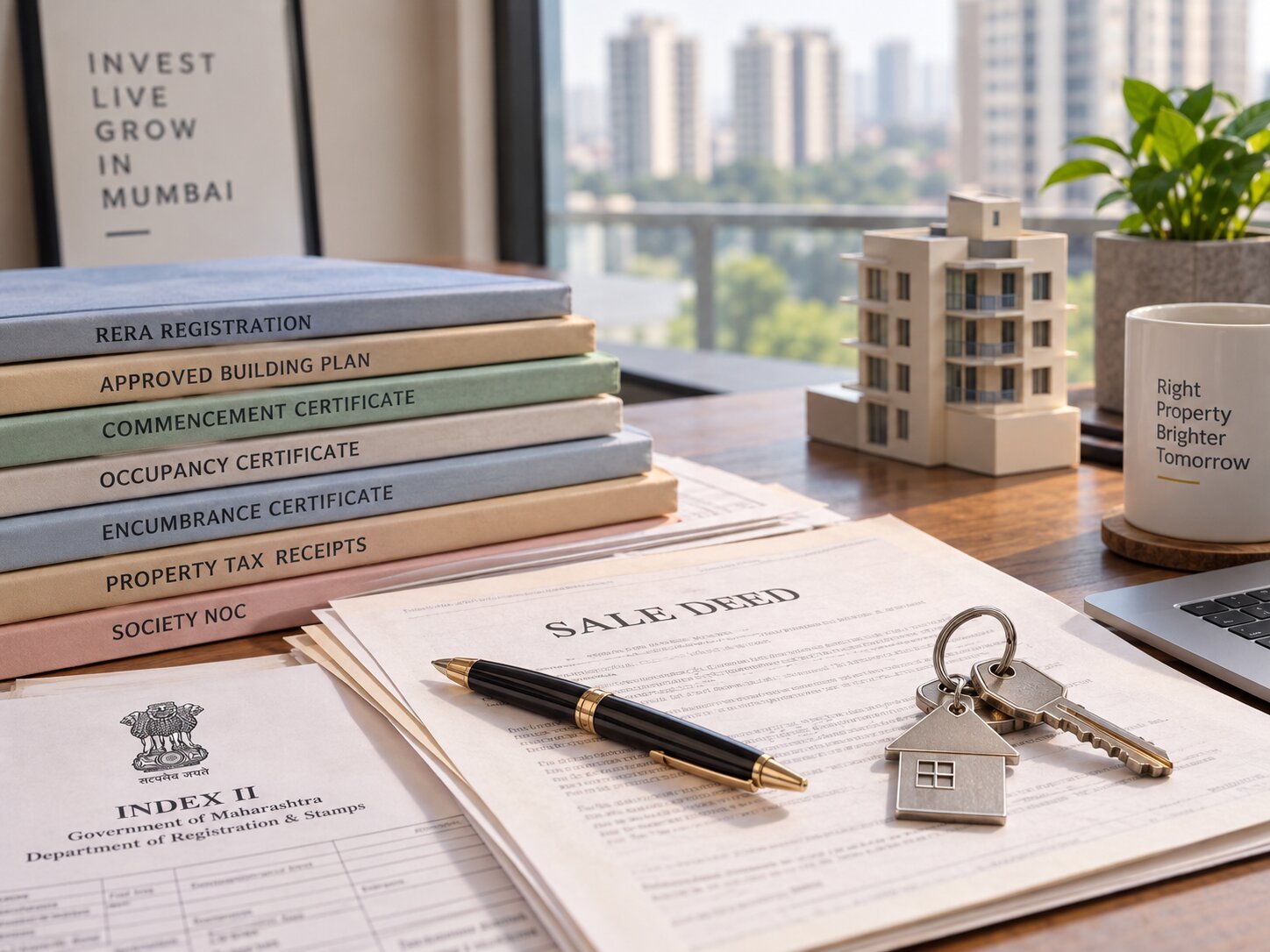
This guide walks through the seven documents that matter most, in plain language, with no legal jargon. It is written for buyers in Bhayander, Mira Road, Vasai and the wider Mumbai western suburbs, whether you are booking your first flat or buying a resale property. If you are still deciding between a ready or under-construction flat, our guide comparing the two covers that decision first.
Start with the RERA registration certificate
Every residential project in Maharashtra with more than eight units or covering more than 500 square metres must register with MahaRERA before the builder can advertise, market or accept a single rupee of booking amount. This single certificate tells you the project is legally allowed to sell flats in the first place.
Ask the builder for the RERA registration number and search it on the MahaRERA website. The listing shows the promised possession date, the sanctioned layout, the number of units already sold and any complaints filed against the project. A builder who hesitates to share this number is telling you something important before you have even asked a second question.
Confirm the approved building plan and commencement certificate
The commencement certificate (CC) is the municipal authority’s formal permission to start construction on a specific, approved layout. The approved building plan shows exactly what the authority signed off on, including the number of floors, the setbacks and the open spaces.
Builders occasionally construct beyond what was approved, adding an extra floor or converting open terrace area into saleable space. Comparing the actual construction against the approved plan catches this early, before you own a flat sitting inside an unauthorised structure.
Trace the title through the chain of sale deeds
Title verification confirms that the person selling you the flat, whether that is a builder or a previous owner, actually has the legal right to sell it. For a new project, this means checking how the builder acquired the land: through outright purchase, a joint development agreement, or a registered power of attorney from the original landowner.
For a resale flat, ask for the full chain of sale deeds going back as far as possible, ideally to the first sale after the building was completed. Every transfer in that chain should be a registered document. An unregistered sale deed anywhere in the chain weakens your own claim to the property, even if your own purchase is done correctly.
Get an encumbrance certificate covering at least 30 years
An Encumbrance Certificate (EC) shows every registered transaction against the property for the period it covers: sales, mortgages, loans and any pending legal claims. A clean EC means no bank has an active loan against the property and no court case is currently attached to it.
Ask for an EC covering at least 30 years rather than a shorter window. A shorter EC can miss an old, still-unresolved mortgage or dispute that a longer search would catch. You can apply for this through the sub-registrar’s office or the IGR Maharashtra portal.
Check the occupancy or completion certificate status
For a ready-to-move flat, the Occupancy Certificate (OC) or Completion Certificate (CC) is what makes the building legally fit to live in. Without it, the building technically should not have residents yet, regardless of how finished it looks. This certificate also determines whether GST applies to your purchase, since GST is charged only when the OC or CC has not yet been issued.
For an under-construction flat, this certificate will not exist yet. Instead, confirm the commencement certificate and check the RERA listing for the promised completion date, since that date is what you are relying on until the OC is actually issued.
Verify property tax receipts and Index II
Property tax receipts confirm the current owner or builder has actually been paying municipal taxes on the property, with no outstanding dues that could later become your liability. Index II is the summary record generated after a sale deed is registered, and it serves as strong evidence of a completed, registered transaction.
For a resale flat, ask the seller for the latest property tax receipt and the Index II from their own purchase. Any mismatch between the name on these documents and the name of the person selling to you needs an explanation before you proceed.
For resale flats, check the society share certificate and NOC
If the flat is part of a housing society, the seller should hold a share certificate in their name, since ownership of the flat and membership in the society are usually linked. Before the sale, the society typically issues a No Objection Certificate (NOC) confirming there are no pending dues or disputes tied to that flat.
Skipping this step is common in a rush to close a resale deal, and it is also one of the easier problems to fix later, provided you catch it before registration rather than after.
How to actually verify these documents in Bhayander, Mira Road and Vasai
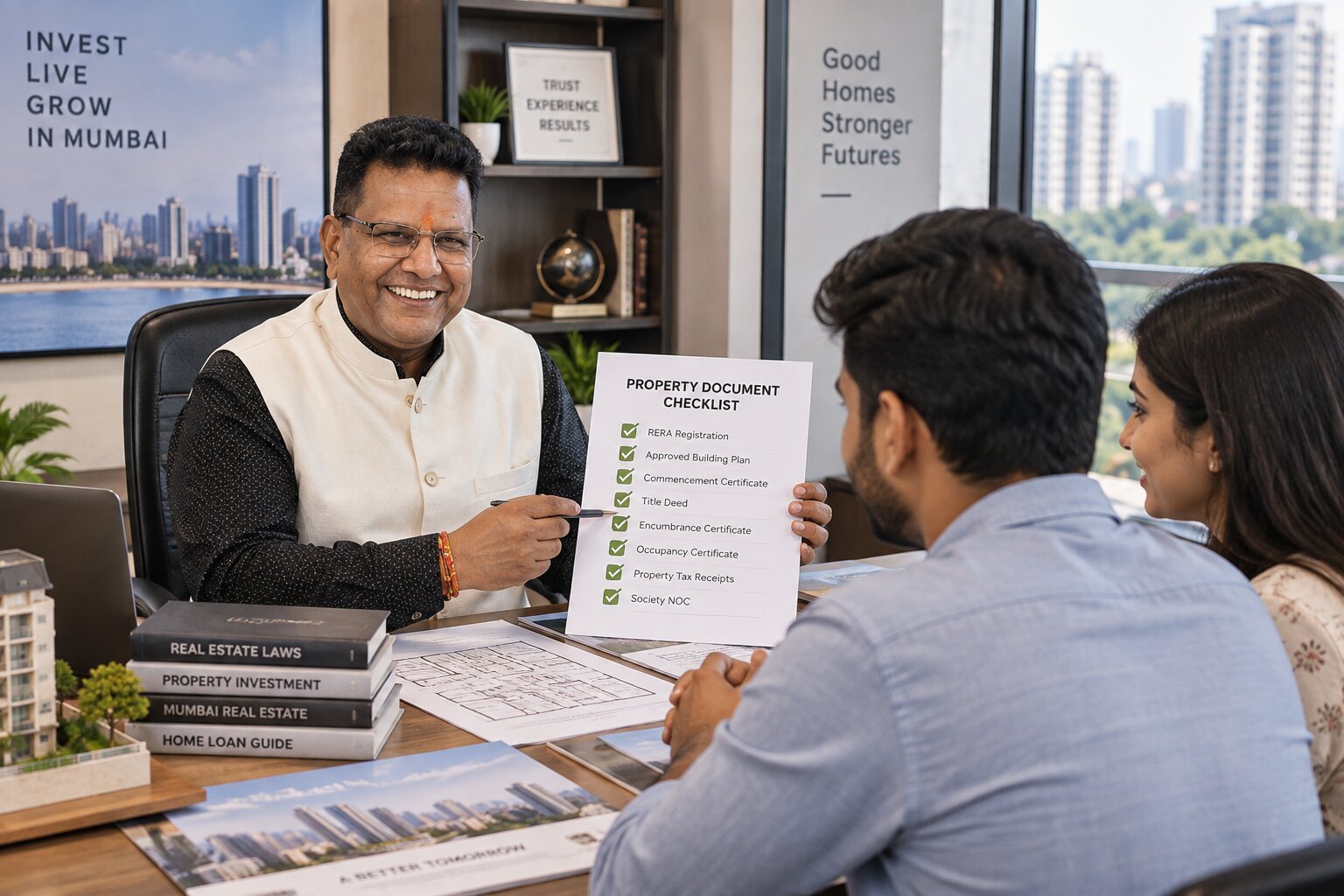
Knowing what to check matters less than knowing where to check it, and the process differs slightly depending on which authority governs your locality.
Bhayander and Mira Road fall under the Mira Bhayandar Municipal Corporation (MBMC), while Vasai falls under the Vasai Virar City Municipal Corporation (VVCMC). Building plan approvals, commencement certificates and occupancy certificates for projects in these areas are issued by the respective corporation, so any query on construction approval should go there first, not to the state RERA office.
For RERA registration itself, the process is uniform across the state. Every project, regardless of which municipal corporation governs it, is searchable on the MahaRERA portal using either the project name or the promoter’s name. For title and encumbrance checks, the relevant sub-registrar office covers whichever taluka the property falls under, and the same records are increasingly available online through the IGR Maharashtra portal.
| Document | What it proves | Where to verify |
|---|---|---|
| RERA registration certificate | Project is legally allowed to sell flats | MahaRERA portal |
| Approved building plan and CC | Construction matches what was approved | MBMC or VVCMC, depending on locality |
| Chain of sale deeds | Seller genuinely owns the property | Sub-registrar office, seller’s documents |
| Encumbrance certificate | No active loan or dispute on the property | Sub-registrar office or IGR Maharashtra portal |
| Occupancy or completion certificate | Building is legally fit to live in | MBMC or VVCMC, depending on locality |
| Property tax receipts and Index II | Dues are clear, transaction is registered | Municipal corporation, sub-registrar office |
| Society share certificate and NOC | Seller is a valid society member, no dues pending | Housing society office |
A mistake worth avoiding
Some buyers treat document verification as something the bank will handle during the home loan process, so they skip checking it themselves. A bank’s due diligence protects the bank’s loan, not necessarily your full interest in the property, and banks generally check enough to secure their own lien rather than everything a buyer should know.
Run your own check, or have someone independent run it for you, before you pay the booking amount rather than after the bank has already approved the loan.
What to do with this checklist
Ask the builder or seller for all seven documents before you pay any booking amount, not after. A genuine, compliant seller will hand these over without hesitation, since none of them are confidential. Reluctance to share any single document on this list is worth treating as a warning sign, not a formality to skip past.
If you would rather not chase these down yourself, we check all seven on every property we present, before it ever reaches a client. Reach out and we can walk you through the specific documents for any flat you are currently considering in Bhayander, Mira Road or Vasai.